

A coin dropped into a well disappears in a moment, but the wish that accompanied it may stay with someone for much longer.
People have been leaving coins and other objects in water for centuries. Wells and springs have held religious and spiritual significance in many cultures, with offerings made to seek help, give thanks or ask for protection.
The familiar act of throwing a coin into a wishing well sits within this wider history of offerings to water. Beliefs and customs have varied across places and periods: coins deposited in holy wells might be offerings to a saint, while today a coin might accompany a wish, a hope for good luck or simply a familiar ritual shared with family or friends.
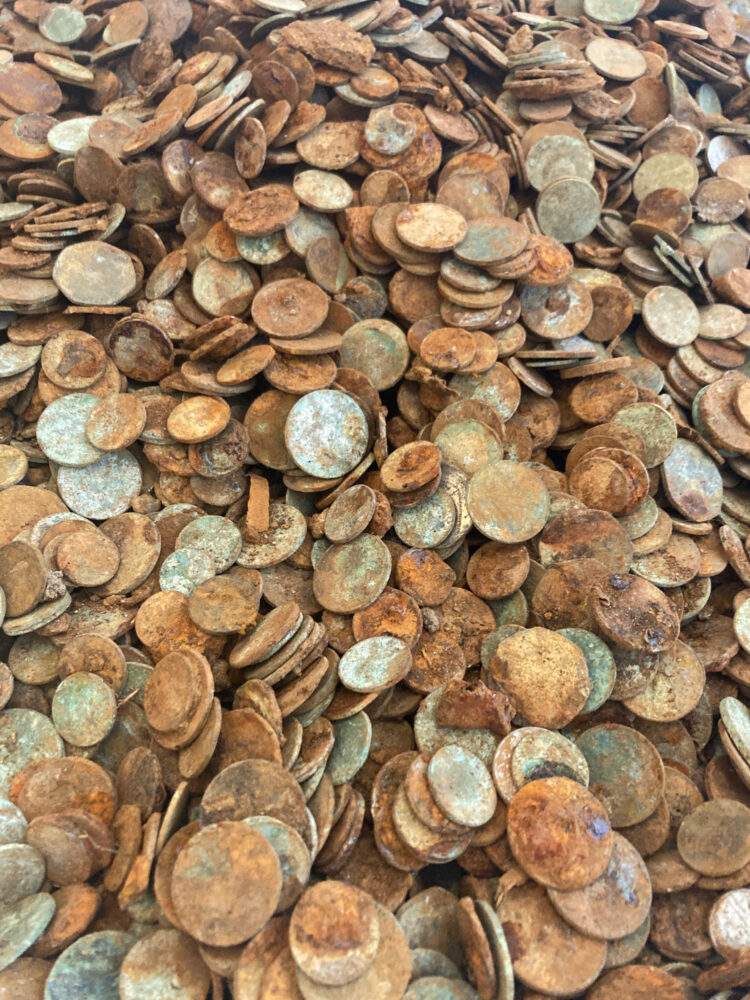
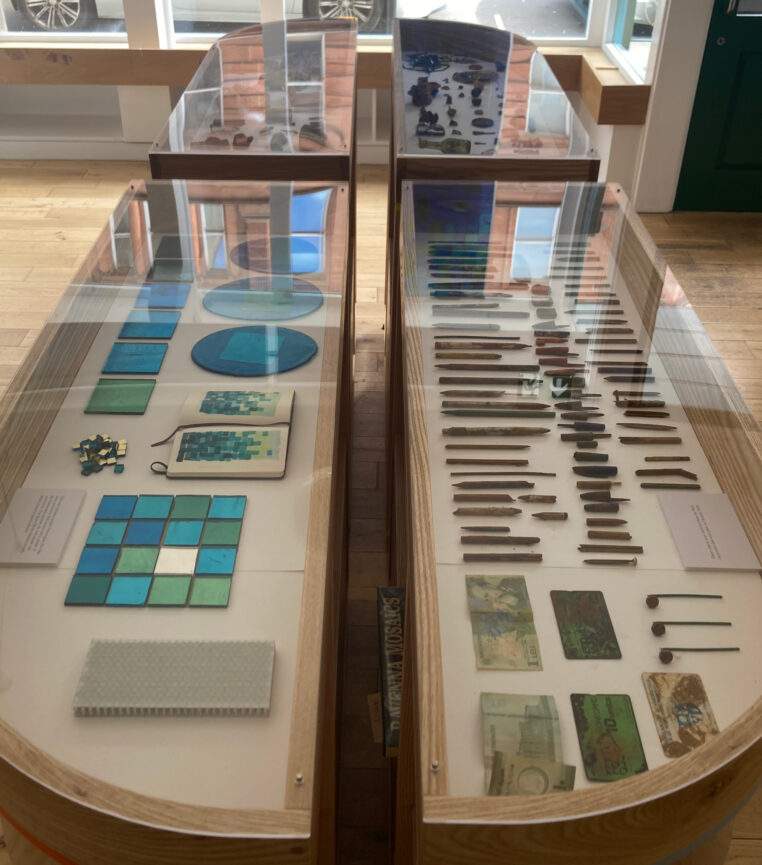
The objects recovered during the excavation of the well at Glasgow Cathedral offer a glimpse into similarly varied human behaviour. Thousands of coins were found, but so were toys, jewellery, a watch, packaging, pens and pencils. Some were deliberately discarded. Others may have fallen accidentally, or been dropped out of curiosity. A few might once have held considerable personal significance.
The From Well to Wellspring exhibition brings these objects back into view. Together, they invite us to consider the people who stood beside the well- and the stories we can, and cannot, recover from what they left behind.
Wishes, losses and moments of curiosity
The coins may have been thrown with a wish or in the hope of good fortune. Others could have been dropped playfully, or because the coins already visible below encouraged another visitor to do the same.
Their monetary value tells us little about the importance of the gesture. A small coin might have accompanied a deeply felt hope: for someone’s health, for a change in circumstances, or for a person far away. Equally, it may have marked a carefree moment during a day out. We cannot recover those wishes, but we can recognise the range of feelings that such a simple action might express.
Other objects are harder to explain. A small bracelet, apparently sized for a child, raises questions about both its arrival in the well and its life beforehand. Did it slip from a wrist as someone leaned over? Was it dropped during play? Or was it deliberately let go?
We do not know whether it was a treasured gift, a favourite accessory or something its owner barely noticed. Its size and appearance offer clues about its use, but cannot tell us what it meant to the person who wore it. An accidental loss could have caused distress; a deliberate disposal might have carried an entirely different meaning. The object survives, but the circumstances of its loss remain unknown.
Small objects, significant attachments
Among the finds are a robot toy, a small dog figure and a Garfield sticker. These familiar objects bring childhood and popular culture into the story of the well.
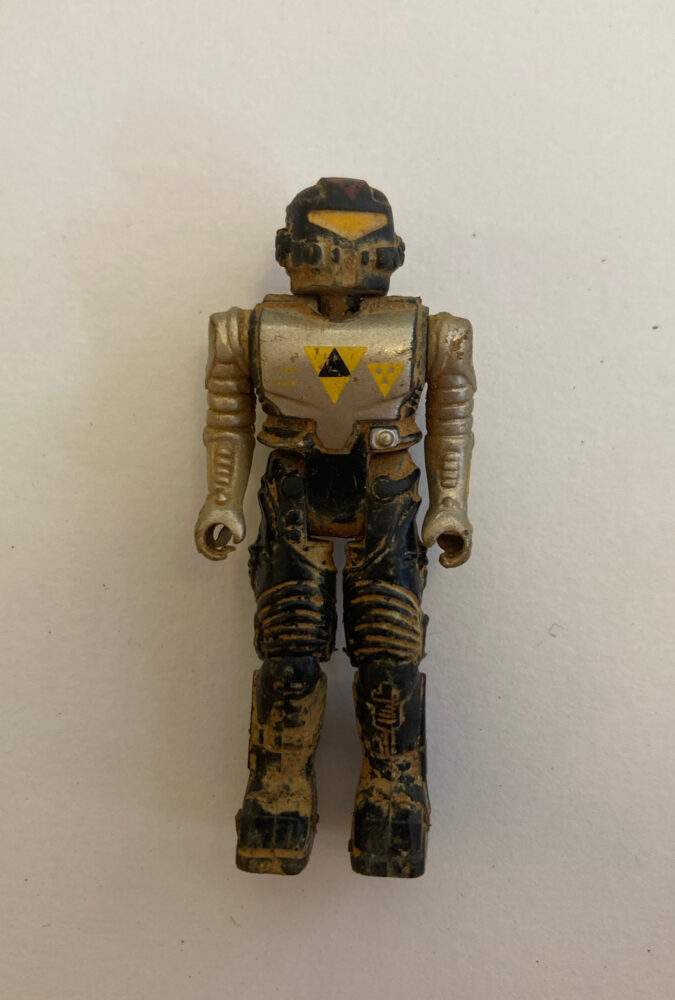
A toy can be inexpensive and mass-produced yet become irreplaceable to its owner. It might be a constant companion, a present from someone important or a reminder of a particular day. Another identical toy would not necessarily carry the same meaning.
Were the toys lost accidentally, or dropped by children who did not understand that they could not retrieve them? These are possibilities rather than answers. Their discovery reminds us how little an object’s appearance can reveal about someone’s attachment to it.
These possibilities matter because they challenge the idea that an object must be rare, beautiful or expensive to deserve our attention. Personal significance often comes from relationships and experiences rather than material value.
When rubbish becomes a record
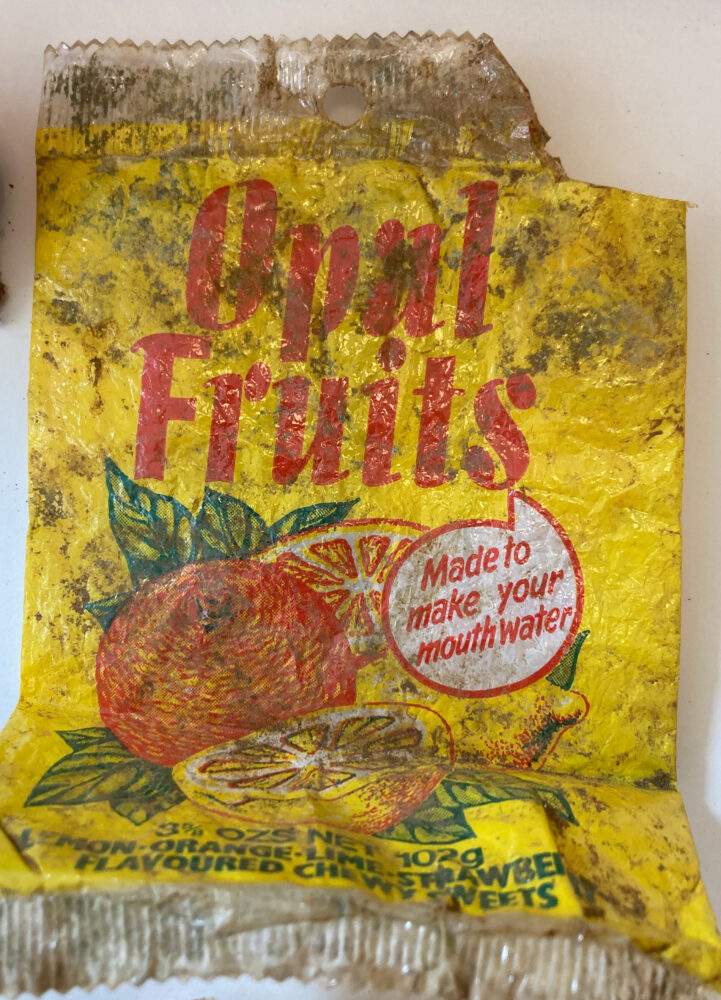
Some of the finds have a more straightforward explanation. Sweet wrappers and crisp packets suggest that visitors sometimes treated the well as a convenient place to dispose of rubbish.
Yet even discarded packaging can tell us something about everyday life. An empty Opal Fruits packet preserves a familiar brand name that may prompt memories of childhood sweets, shopping trips or shared treats. For the person who discarded it, it may have been nothing more than an empty wrapper. For someone seeing it in an exhibition years later, it can become a reminder of their own past. An object’s meaning can change depending on who encounters it, and when.
The pens and pencils may also reflect a moment of curiosity. One suggestion is that visitors dropped them to listen for a splash and judge the well’s depth, particularly if it was difficult to see the water below. Some may instead have fallen from pockets or hands. The objects alone cannot establish which explanation is correct, and remind us that the history of a place includes brief visits, private hopes, careless actions and accidental losses, as well as the events recorded in documents.
They also ask us to look differently at our own belongings. Which everyday object would you be most upset to lose? And would a stranger, finding it years later, understand why?
If these objects have caught your imagination…
Other museums and projects explore the connections between ordinary possessions and human experience. Some preserve the owners’ accounts alongside their objects; others, like the well collection, invite us to consider lives whose details are harder to recover.
Museum of Broken Relationships, Croatia and Thailand
With permanent museums in Zagreb and Chiang Mai, the Museum of Broken Relationships collects objects associated with relationships that have ended. Contributors share their stories, allowing visitors to understand why an apparently unremarkable possession can carry powerful memories. It offers a moving counterpart to the well finds: here, the personal account helps reveal what appearance alone cannot. Since its inception, the museum has toured 68 cities across 35 countries, including Tokyo, San Francisco, Berlin, Paris, London, and Shanghai.
Your Story, Our Story, United States
The Tenement Museum’s Your Story, Our Story is a digital storytelling project exploring immigration, migration and cultural identity through objects and traditions. Contributions connect personal and family experiences with wider histories, showing how belongings can help people remember, express identity and pass stories between generations.
Below the Surface, Amsterdam
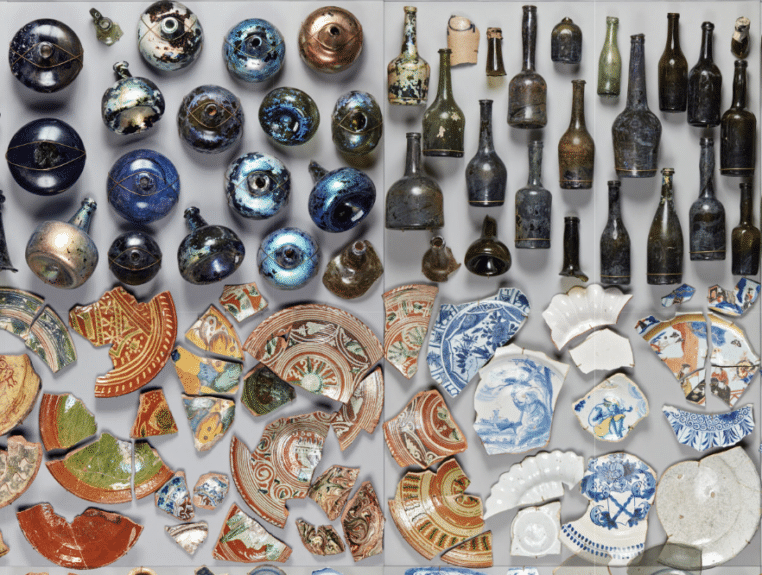
Excavations for Amsterdam’s North – South metro line recovered around 700,000 archaeological finds, with approximately 10,000 displayed beside the escalators at Rokin station. The Below the Surface website lets visitors explore thousands of finds online. Like the objects from the well, this extraordinary collection reveals how things lost or discarded can become evidence of everyday life.
Everyday Objects Transformed by the Conflict, Northern Ireland
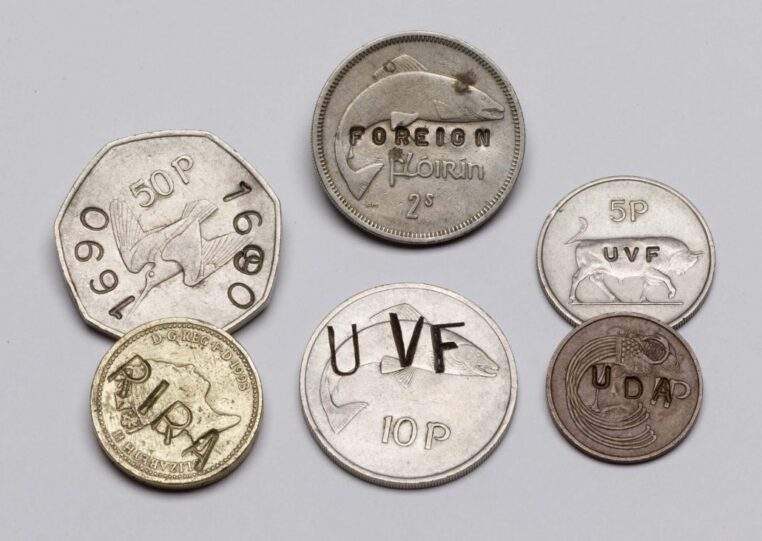
Healing Through Remembering’s Everyday Objects Transformed by the Conflict brings together loaned objects and accounts written by their owners, exploring experiences of the conflict in and about Northern Ireland. A bin lid used for street communication, a bullet-proof clipboard and a printed matchbox demonstrate how circumstances can give familiar objects unexpected roles and meanings. The project allows different experiences to sit alongside one another, without seeking a single agreed version of the past.
Each of these collections offer a different way of understanding the relationships between people and their possessions. Together, they remind us that looking closely at an object is only the beginning. Sometimes its most significant story is one we cannot see.